
Eversmoothpro Ltd · Eastleigh & Hampshire
Exterior renderingfor homes in Eastleigh
Make an informed choice about your exterior walls, with practical advice on preparation, finish and the condition beneath the surface.
13 years
in the trade
£1m insured
public liability
Verbal guarantee
on work carried out
Free quotes
no obligation
Rendering
A new finish starts with understanding the wall
External rendering creates a finished surface over suitable exterior masonry or another compatible background. It can refresh a tired elevation, bring different areas of a house into a more coherent appearance and provide a weather-facing layer as part of a correctly designed wall build-up. The right approach depends on what the wall is made from, how it manages moisture and what is already attached to it. A neat-looking finish alone cannot tell you whether those underlying conditions are suitable.
Eversmoothpro Ltd is led by George Rogowski and brings 13 years of experience to discussions about rendering in Eastleigh, Hampshire. The business holds £1m public liability insurance and offers free, no-obligation quotes. Rather than assuming every house needs the same treatment, an enquiry can explore the existing surface, the appearance you want and any visible defects. Traditional rendered finishes, silicone render and monocouche render have different characteristics; suitability needs to be considered against the actual property and the requirements of the proposed system.
Before choosing a colour or texture, it helps to establish whether old coatings are sound, whether cracks are stable and whether staining points to a continuing moisture source. Window edges, roof abutments, ground levels and changes between materials can all influence the work. Depending on the findings, the options might include local repairs, removal of unsuitable material or a more extensive replacement finish. These are matters for assessment and an agreed quotation, not automatic steps that every elevation requires.
Before you start
What your existing finish may be telling you
Cracks that need context
A crack may be confined to the finish, follow a junction between materials or reflect movement within the background. Covering it without understanding that distinction can leave the same pattern visible again. The width, location and history matter, and an assessment may identify a need for further investigation before a suitable rendering approach can be discussed.
Loose, hollow or patched areas
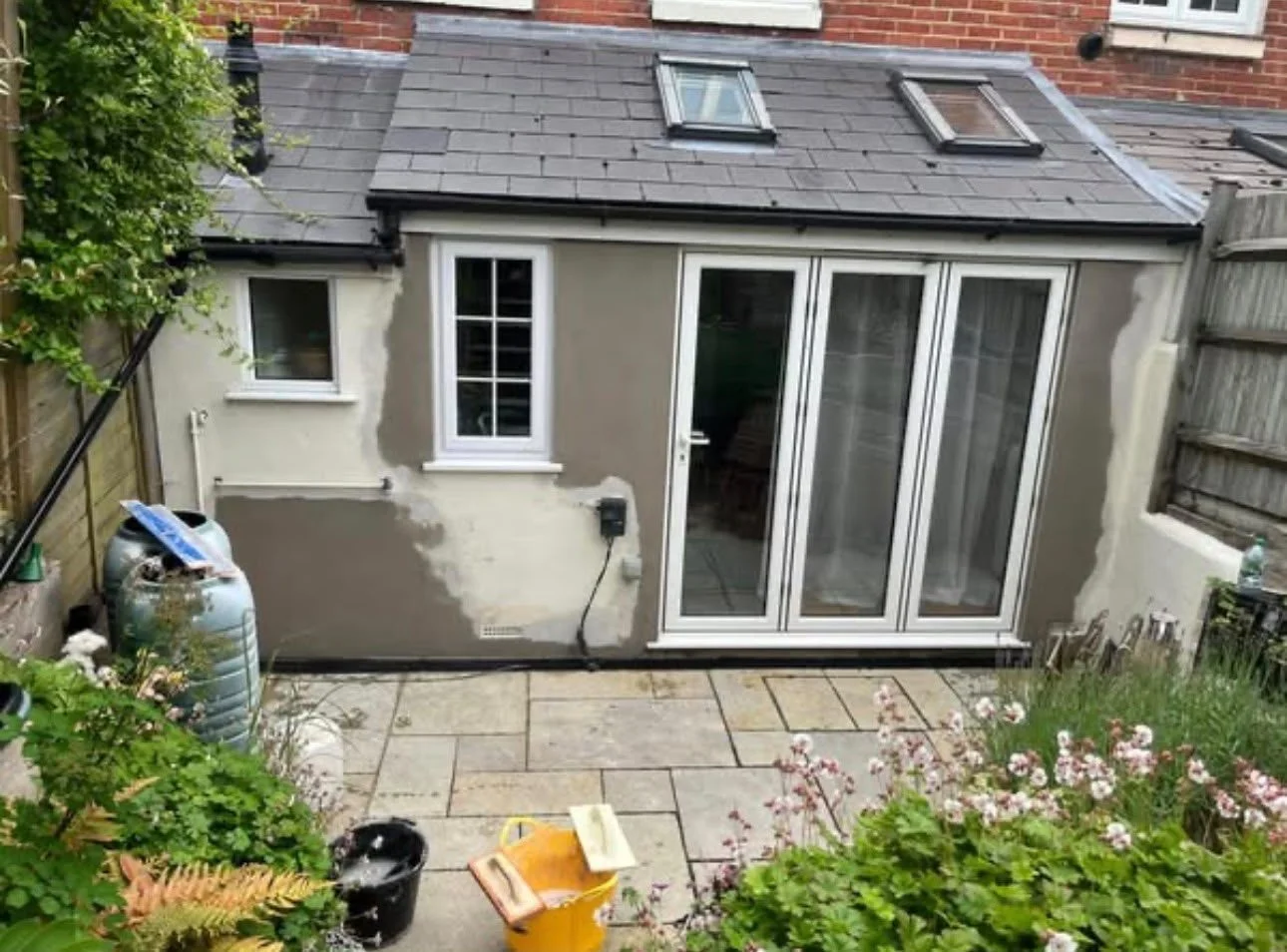
Older render can remain attached in some places while losing its bond elsewhere. Repeated patches may also differ in strength, texture or absorbency. The extent of any removal depends on what is sound and compatible with the proposed finish. Keeping existing material is not necessarily wrong, but its condition should inform the decision rather than appearance alone.
Staining and recurring damp patches
Marks below a leaking gutter, near a downpipe or at the base of a wall may have a source that new render will not resolve. Rain exposure, drainage details and moisture within the construction need separate consideration. Rendering is not a general damp cure, and unexplained moisture should be understood before a replacement finish is treated as the answer.
A clear next step
From first look to finished surface
Discuss the property and the objective
Start with the elevations you want to improve and what has prompted the enquiry. Photographs, the approximate age of the house and any known history of cracking or damp can help frame the conversation. Access limitations, adjoining surfaces and whether you are seeking a close match or a changed appearance are useful points to raise from the outset.
Review the background and relevant details
An assessment can consider existing render, masonry, coatings and vulnerable junctions. The purpose is to establish what the proposed finish would be relying on, not simply how many square metres are visible. Where the cause of a defect remains unclear, further advice or investigation may be appropriate before a firm specification can sensibly be agreed.
Compare suitable finish and preparation options
Preparation could involve cleaning, removing unsound material, addressing compatible repairs or using a specified bonding or basecoat arrangement. Reinforcement mesh, beads and movement detailing may be relevant according to the construction and chosen system. These are conditional options, not a universal recipe, and their use should follow the applicable manufacturer requirements and site assessment.
Agree the scope and plan around conditions
A written scope can clarify the elevations included, proposed finish, preparation assumptions and any exclusions. Scaffolding or other access arrangements, protection of nearby features and weather-sensitive working stages can affect planning. Application and curing requirements vary, so the programme should reflect the specified materials and conditions rather than a promise based only on wall area.
Review the finish and discuss ongoing care
Once the work reaches the appropriate stage, the completed appearance and relevant care requirements can be discussed. Keep information about the finish, colour and any agreed maintenance guidance for future reference. If later alterations involve drilling, replacement windows or new pipework, compatible detailing matters because changes at the surface can affect how water is directed away.
The difference it makes
A finish that works for your home
A more considered exterior appearance
A compatible rendered finish can create a more consistent visual treatment across suitable areas of a property. Texture, colour and the relationship with brickwork or other cladding all influence the result. Discussing those choices before work begins helps keep expectations grounded in the building rather than in a small sample viewed in isolation.
A finish chosen for the background
Different wall constructions respond differently to moisture, temperature and movement. Choosing a system with the background in mind can avoid treating every house as if it were modern, uniform masonry. Older or unusual construction may need specialist consideration, particularly where the existing wall relies on a particular balance of moisture movement and drying.
Better attention to vulnerable transitions
Edges around openings and connections with other building elements deserve as much thought as the broad wall surface. An appropriate design can help manage rain at these transitions. The exact details remain dependent on the property and specification; render should not be expected to compensate for defective flashings, seals or drainage elsewhere.
Clearer decisions about the work required
A condition-led discussion helps distinguish cosmetic aims from repairs and unresolved defects. That makes it easier to compare quotations on a meaningful basis: preparation, access, finish and exclusions rather than a headline figure alone. It also provides an opportunity to identify work outside the rendering scope before the exterior is refinished.
Materials & methods
Decisions that shape a rendering specification
Existing coatings and substrate compatibility
Paint, previous render, brick, block and mixed backgrounds can each influence adhesion and preparation. The condition beneath a coating may not be fully apparent until inspection or agreed opening-up. A proposed build-up should be checked for compatibility, including any primer or basecoat requirements, instead of assuming a new finish can simply be applied over whatever is present.
Mesh, beads and movement provision
Some systems incorporate reinforcement mesh within a specified basecoat, with additional attention around openings or changes in background. Beads may define edges and terminations. Movement joints in the construction need consideration rather than being casually covered over. Selection, placement and continuity depend on the system design and site conditions; mesh is not a guarantee against all future cracking.
Moisture and the surrounding building fabric
Wall finishes work alongside roofs, gutters, sills and ground-level details. If those elements direct water into or behind a finish, replacing the surface alone may leave the problem unresolved. The way the existing wall dries also matters. Any concern about trapped moisture, persistent damp or a vulnerable background should be assessed before deciding what material belongs on the outside.
Appearance, exposure and future access
A smooth or textured finish can read differently across a large elevation, particularly in changing light. Sheltered sections and exposed corners may also weather differently. Consider how the colour relates to neighbouring materials and how future maintenance will be accessed. Where planning controls or restrictions may apply, confirm the relevant requirements before committing to a change in exterior appearance.
Questions
Rendering FAQs
How much does external rendering cost?
The cost depends on the wall area, access, existing surface, preparation and selected finish. Removing failed render or dealing with difficult junctions can change the scope substantially. Eversmoothpro Ltd offers free, no-obligation quotes so the proposed work can be considered for your property. Ask what is included, what is excluded and how any concealed defects would be handled before comparing quotations.
How long will a rendering project take?
There is no single timetable that suits every house. Access arrangements, removal work, repairs, application stages and drying or curing requirements all influence the programme. Rain, temperature and other site conditions may affect when materials can be used. Discuss an indicative schedule once the property and proposed system have been assessed, allowing for weather-related changes rather than assuming uninterrupted work.
What preparation is needed before rendering?
Preparation is determined by the background and chosen system. It may involve removing loose material, suitable cleaning, compatible repairs or a specified primer and basecoat. Relevant junctions and movement details also need consideration. Before work starts, discuss access and protection for windows, paths and planting; do not assume every wall needs stripping or that all existing finishes can remain.
Does Eversmoothpro Ltd offer a guarantee?
A verbal guarantee is offered. Ask George Rogowski to explain what that means for your proposed rendering work before proceeding, including what is being covered. No duration, written policy or particular remedy is stated here. The business also holds £1m public liability insurance, which is separate from a guarantee and should not be treated as a promise about finish performance.
How long will new render last?
Its serviceable life depends on the materials, background, exposure, detailing, workmanship and ongoing condition of the building. There is no fixed lifespan that can responsibly be applied to every property. Keeping gutters and related details in good order and responding to changes in the finish can help identify issues early. A surface that still looks tidy may nevertheless warrant assessment if cracking or damp appears.
Can you help with an urgent rendering problem?
Call to check whether your location and the work can be accommodated. Emergency attendance, immediate availability and response times are not promised. If render appears loose or is falling, keep people away from the affected area and seek appropriate professional advice rather than trying to inspect it at height. An enquiry can establish whether a rendering assessment is the appropriate next step.
Do you cover Eastleigh and elsewhere in Hampshire?
Eversmoothpro Ltd welcomes enquiries about rendering in Eastleigh and Hampshire. Share the property address, the elevations involved and any access constraints so coverage and suitability can be checked for your enquiry. Working hours are 8AM–5PM, Monday to Friday. Mention related exterior works at the same time so their effect on the proposed rendering scope can be considered.
How should a rendered exterior be maintained?
Care depends on the type of render and any paint or coating applied to it. Follow guidance appropriate to that finish rather than assuming aggressive washing or a household cleaner is suitable. Watch for new cracks, loose areas, staining and failing adjacent seals or rainwater goods. If decoration is needed later, establish coating compatibility first; not every paint suits every rendered wall.
Free, no-obligation quote
Discuss your Eastleigh rendering project
Speak to George Rogowski at Eversmoothpro Ltd about the condition of your walls and the finish you have in mind. Request a free, no-obligation quote and discuss the scope before making a decision. Working hours are 8AM–5PM, Monday to Friday.
13 years in the trade · £1m public liability insurance · Verbal guarantee on work